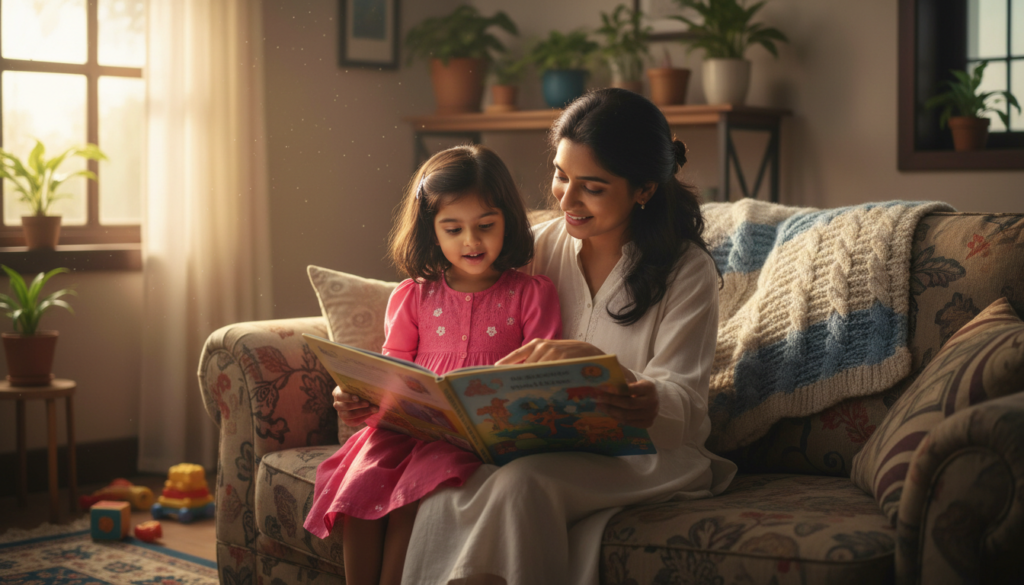
Parents’ level of education is one of the background factors most often linked to how well children do in school. But the link does not look the same at every age.
For a toddler, it shows up in words and play. For a ten-year-old, it shows up in reading and homework. For a teenager, it shows up in course choices and college plans.
This guide walks through each stage of a child’s education and explains how parental education can make a difference, and what families can do at each step.
A Quick Look at the Evidence
Research from many countries finds that children of parents with more schooling tend, on average, to have higher test scores and stay in education longer. A U.S. National Center for Education Statistics report on parents’ education and children’s achievement is one example of this research.
Keep two points in mind:
- These are averages across many families.
- Parental education often travels with other factors, such as income and neighbourhood, so it is hard to separate one cause.
For a broad overview, see our main guide on how parental education affects children’s success. Below, we look at it stage by stage.
Stage 1: The Early Years (Birth to Age 5)
The first five years are when the brain grows fastest. Harvard’s Center on the Developing Child describes how “serve and return” interactions, the back-and-forth between a child and an adult, help build brain connections.
How parental education may show up
- More talking, singing and reading with babies
- More knowledge about child development and milestones
- More use of preschool and early learning programmes
What any parent can do
- Talk to your baby all day, in any language.
- Answer their sounds, smiles and pointing.
- Share picture books, even if you just describe the pictures.
- Play simple games with counting, colours and shapes.
Learn more about how young children learn in our guide to the preschool learning process.
Stage 2: Primary School (Ages 6 to 11)
This is when reading, writing and maths skills are built. Gaps that start in the early years can grow if they are not addressed.
How parental education may show up
- Parents feel confident helping with reading and homework.
- Homes have more books and learning materials.
- Parents talk with teachers more often and ask for extra help early.
What any parent can do
- Set up a daily reading time, even 15 minutes.
- Ask your child to teach you what they learned. Explaining helps them remember.
- Keep a regular homework routine in a quiet spot.
- Meet the teacher and ask, “What can I do at home to help?”
- Use the library. It is free and full of books at every level.
Stage 3: Lower Secondary (Ages 12 to 14)
Subjects get harder and children want more independence. Motivation can drop.
How parental education may show up
- Parents can explain harder subjects like algebra or science.
- Parents talk about future careers and link them to school subjects.
- Families may pay for tutoring if a child falls behind.
What any parent can do
- You do not need to know algebra. Ask your child to show you their work and explain it.
- Help them find free online lessons or study groups.
- Talk about jobs you admire and what study they need.
- Keep an eye on homework load and sleep. Our article on how much homework is too much can help.
Stage 4: Upper Secondary and Beyond (Ages 15 to 18)
This stage shapes what comes next: university, college, training or work.
How parental education may show up
- Parents understand exams, admissions and scholarship forms.
- Parents expect their children to continue studying.
- Families have contacts who can give career advice.
The effect can last into adult life. An article in The Conversation, drawing on OECD data, explains how your parents’ level of education affects your chances, including adult wages. That is why these years matter so much.
What any parent can do
- Talk early and often about plans after school.
- Ask the school counsellor about exams, deadlines and fee waivers.
- Look for scholarships together.
- Tell your child clearly that you believe they can go further.
The Factors That Matter Most
Across all four stages, the same few things appear again and again. They are the real “engine” behind the link:
| Factor | Needs a degree? |
|---|---|
| Talking and reading with your child | No |
| High, clear expectations | No |
| Regular routines for sleep and homework | No |
| Contact with teachers | No |
| Knowing how exams and admissions work | No, it can be learned |
The good news is clear: the habits that matter most are open to every family.
Frequently Asked Questions
At what age does parental education matter most?
The link is seen at every age. Many experts stress the early years, because skills build on each other. But support in the teenage years is just as important for college decisions.
Can a child overcome low parental education?
Yes. Many children do. Strong schools, caring adults, and a home that values learning all help.
Does it matter which parent has more education?
Studies differ. Many find strong links with the mother’s education, especially for young children. Both parents’ support matters.
Key Takeaways
- The link between parental education and school results appears at every stage.
- It looks different for toddlers, children and teens.
- Talk, reading, routines, expectations and school contact explain much of it.
- Every parent can practise these habits.