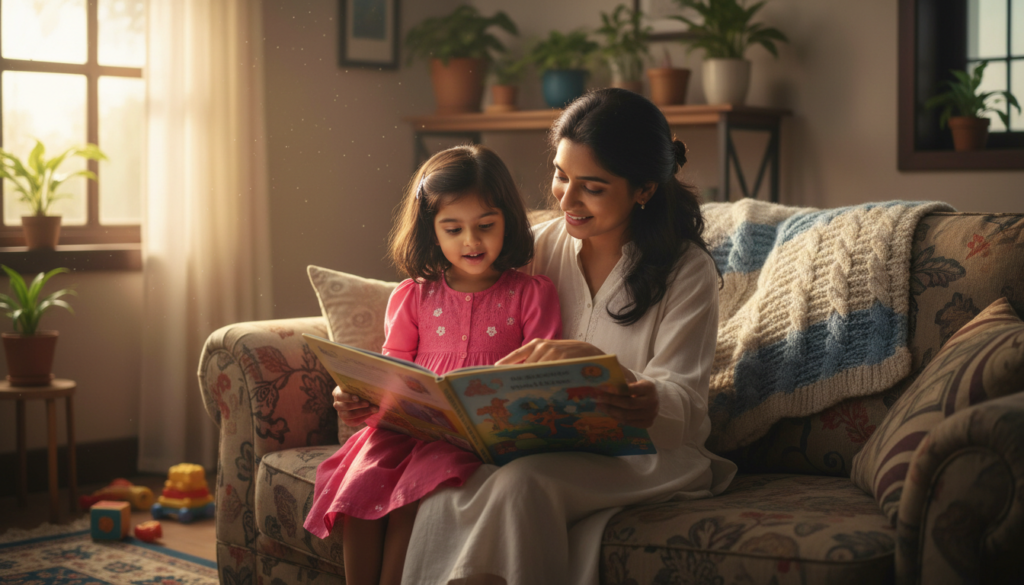
Reading is one of the most important skills a child will ever learn. It opens the door to every school subject, and it gives children a lifelong source of joy.
You do not need to be a teacher to help your child learn to read. Short, happy sessions at home make a real difference. What matters most is patience, routine and lots of talking and sharing books together.
This guide explains how to teach a child to read in ten simple steps, from building listening skills to reading short books alone.
When Should a Child Start Learning to Read?
Every child is different. Many children begin to recognise letters and sounds between the ages of four and six, and many start reading simple words around five to seven. Some start earlier and some later, and both can be normal.
The early steps start long before formal reading. Talking, singing, telling stories and looking at picture books from babyhood all build the skills children need later. If you are worried that your child is far behind others of the same age, speak to their teacher or a doctor.
The Building Blocks of Reading
Reading experts often describe five key skills:
- Phonemic awareness: hearing and playing with the small sounds in words.
- Phonics: linking letters to sounds.
- Fluency: reading smoothly at a good pace.
- Vocabulary: knowing the meaning of many words.
- Comprehension: understanding what is read.
The steps below build these skills in a natural order.
Step 1: Read Aloud Every Day
Reading aloud is the simplest and most powerful habit. Choose a short book with pictures and read it together every day, even for ten minutes. Point to the words as you read. Talk about the pictures and ask, “What do you think will happen next?”
This shows children that print carries meaning and that books are fun.
Step 2: Build Listening and Sound Skills
Before children can read, they need to hear the sounds inside words. Play simple sound games:
- Rhyming: “What rhymes with cat? Hat, bat, mat!”
- First sounds: “What sound does sun start with? /s/.”
- Clapping syllables: clap once for dog, twice for ta-ble.
- Blending: say /c/ /a/ /t/ slowly and ask what word it makes.
Reading Rockets has a helpful list of sound awareness activities for kindergarteners that you can do at home without any materials.
Step 3: Teach Letter Names and Sounds
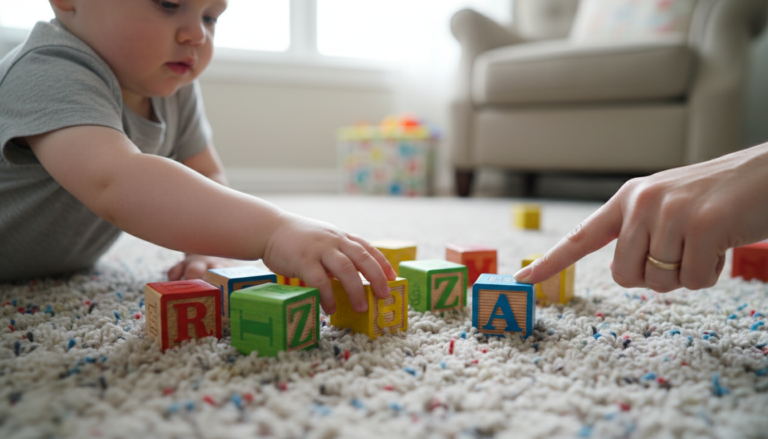
Introduce letters a few at a time, not all 26 at once. Many programmes start with letters like s, a, t, p, i, n because they make many simple words.
Teach the sound as well as the name. For example, the letter m says /m/ as in mango. Use fun ways to practise: magnetic letters, tracing letters in sand or rice, or finding letters on signs when you go out.
Step 4: Blend Sounds Into Words
When your child knows a few letter sounds, start blending them into short words. Point to each letter, say its sound, then slide the sounds together.
s – a – t becomes sat. p – i – n becomes pin.
Start with three-letter words that follow a consonant-vowel-consonant pattern, such as cat, dog, sun, pen. These are easy to sound out.
Step 5: Introduce Sight Words
Some common words do not follow simple sound rules, or they appear so often that children should know them by sight. Examples include the, said, was, you, they, are and of.
Write a few on cards. Practise three to five at a time. Play games like hiding the cards around the room and asking your child to find and read them.
Step 6: Read Simple Decodable Books
Decodable books use mostly the letter sounds and words your child has already learned. They help children feel successful because they can sound out almost every word.
Let your child read a little, then you read a little. Praise effort: “You sounded that out all by yourself!”
Step 7: Talk About the Story
Reading is about understanding, not just saying words. After each book, ask simple questions:
- Who was in the story?
- What happened first? What happened at the end?
- What was your favourite part? Why?
- What would you do if you were the main character?
Step 8: Build Vocabulary Through Talk
Children who hear many words learn to read and understand more easily. Talk with your child during daily activities: cooking, shopping, walking. Name things, describe them and explain new words in simple ways.
If your family speaks more than one language at home, that is a strength. Rich talk in any language helps children understand stories and ideas.
Step 9: Keep Sessions Short and Fun
Young children learn best in short bursts. Ten to fifteen minutes a day is better than one long, tiring session a week. Stop while your child is still enjoying it.
Never use reading as a punishment. If your child is tired or upset, read to them instead of asking them to read to you.
Step 10: Create a Reading-Friendly Home
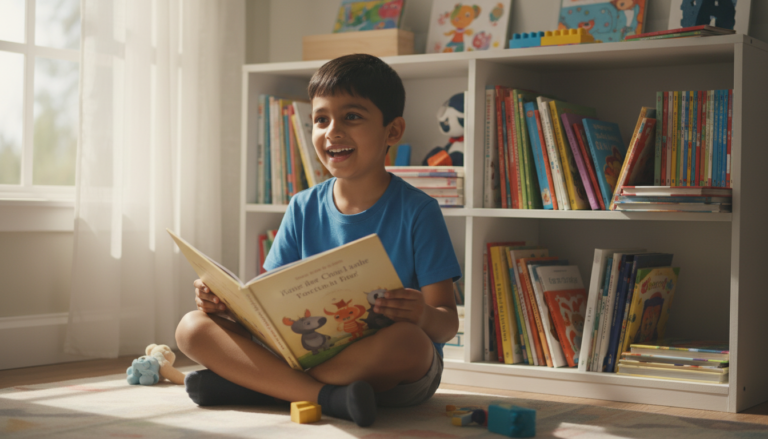
Make books easy to reach. A small shelf or a basket of books in the living room invites children to pick them up. Visit a library if one is nearby. Let children see you reading too; children copy what adults do.
For more practical ideas, read Reading Rockets’ article on teaching reading at home and their tips on letters and sounds for parents.
A Simple Weekly Reading Plan
| Day | Activity (10–15 minutes) |
|---|---|
| Saturday | Read a picture book aloud and talk about it |
| Sunday | Rhyming and first-sound games |
| Monday | Learn two new letter sounds |
| Tuesday | Blend sounds into three-letter words |
| Wednesday | Practise three sight words with a game |
| Thursday | Child reads a short decodable book |
| Friday | Free choice: child picks any book to share |
Common Mistakes Parents Make
- Pushing too hard, too early. Pressure can make children dislike reading.
- Teaching only letter names. Children need letter sounds to read words.
- Correcting every small error. Let small slips go if the meaning is right. Praise effort.
- Comparing with other children. Every child learns at their own speed.
- Stopping read-alouds once children can read. Keep reading together. It builds vocabulary and love of books.
When to Ask for Help
Talk to your child’s teacher if your child has trouble hearing rhymes, remembering letter sounds, or still finds simple words very hard after plenty of practice. Early help works best. A teacher, speech therapist or doctor can check for hearing, vision or learning difficulties.
Frequently Asked Questions
What is the fastest way to teach a child to read?
There is no magic shortcut. Daily read-alouds, letter-sound practice and blending short words, done in short and happy sessions, give the best results.
Should I teach letter names or sounds first?
Both are useful, but sounds are what children need to read words. Many parents teach the sound and name together.
How long does it take to learn to read?
It varies. Most children move from first sounds to reading simple books over one to two years of regular practice.
Conclusion
Teaching a child to read at home is simple when you take it one step at a time. Read aloud every day, play sound games, teach letter sounds, blend short words and keep it fun. Your time and encouragement are the best gifts you can give.
To support your child’s wider learning, read our guide to the preschool learning process, our early childhood education tips for parents, and why parental involvement in child education matters so much.