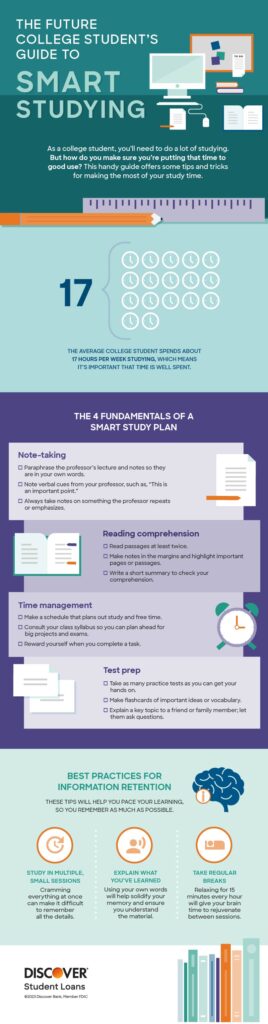
A study timetable is a simple plan that tells you what to study and when. Without one, it is easy to spend too long on favourite subjects, forget others, and leave everything until the last minute.
A good timetable reduces stress, builds steady habits and makes sure every subject gets attention. It also helps you balance study with school, rest, family and hobbies.
This guide shows you how to make a study timetable for students step by step, with three sample timetables you can copy and adjust.
Why You Need a Study Timetable
- It saves time: you do not waste minutes deciding what to do next.
- It covers every subject: weak subjects get regular practice.
- It builds habits: studying at the same time each day becomes automatic.
- It reduces cramming: spreading study over time helps memory. Wikipedia’s article on the spacing effect explains why.
- It protects rest: planned breaks and free time help you avoid burnout.
Step 1: Know Your Fixed Hours
Write down the times you cannot change: school or college hours, coaching or tuition, travel time, prayers, meals and sleep. Your study time fits around these.
Step 2: List Your Subjects and Rate Them
List every subject. Next to each, mark it as strong, average or weak. Weak subjects need more time each week, but do not ignore strong ones completely.
Step 3: Decide Your Daily Study Hours
Be realistic. On school days, two to four hours of self-study is achievable for most secondary and higher secondary students. On weekends and holidays, you can do more. It is better to stick to a modest plan than to fail a very ambitious one.
Step 4: Divide Time Into Blocks
Use study blocks of 30 to 50 minutes with short breaks. Put your hardest subjects at the time of day when you feel most alert.
Step 5: Mix Subjects
Do not study the same subject all day. Mixing subjects keeps you fresh and lets you return to topics with gaps in between, which helps memory. The Learning Scientists explain this in their post spacing retrieval is more important than extra retrieval.
Step 6: Add Revision and Practice Time
Every week, plan time to review older topics and do practice questions. A good rule is to spend some time each day reviewing what you learned the day before.
Step 7: Include Breaks, Rest and Fun
Plan free time for exercise, hobbies, family and friends. Keep one lighter day each week. Rest makes your study time more effective.

Sample Timetable 1: School Day (Class 8–10)
| Time | Activity |
|---|---|
| 6:00–6:30 | Wake up, freshen up |
| 6:30–7:15 | Study: Mathematics (practice problems) |
| 7:15–8:00 | Breakfast, get ready |
| 8:00–1:30 | School |
| 1:30–3:30 | Lunch, rest, free time |
| 3:30–4:15 | Study: Science (read and make notes) |
| 4:15–5:30 | Play or outdoor activity |
| 5:30–6:15 | Study: English (grammar practice) |
| 6:15–6:30 | Break |
| 6:30–7:15 | Study: Bangla or another subject |
| 7:15–8:30 | Dinner, family time |
| 8:30–9:15 | Homework and quick review of the day |
| 9:30 | Sleep |
This gives about three hours of focused self-study on a school day.
Sample Timetable 2: Exam Preparation Day (Holiday)
| Time | Activity |
|---|---|
| 6:30–7:00 | Wake up, light exercise |
| 7:00–9:00 | Hardest subject (two 50-minute blocks) |
| 9:00–9:30 | Breakfast |
| 9:30–11:30 | Second subject: past questions |
| 11:30–12:00 | Break |
| 12:00–1:00 | Language subject |
| 1:00–2:30 | Lunch and rest |
| 2:30–4:30 | Third subject: self-testing |
| 4:30–5:30 | Outdoor break |
| 5:30–7:00 | Revision of older chapters |
| 7:00–8:30 | Dinner and family time |
| 8:30–9:30 | Light review and plan tomorrow |
| 10:00 | Sleep |
Sample Timetable 3: Weekly Subject Plan
| Day | Block 1 | Block 2 | Block 3 |
|---|---|---|---|
| Saturday | Maths | English | Physics |
| Sunday | Chemistry | Bangla | Maths review |
| Monday | Biology | Maths | English review |
| Tuesday | Physics | ICT | Chemistry review |
| Wednesday | Maths | English | Biology review |
| Thursday | Chemistry | Bangla | Weekly test |
| Friday | Light revision | Rest | Plan next week |

Tips to Stick to Your Timetable
- Put it where you can see it, on your wall or as a phone wallpaper.
- Start small. Follow it for one week, then adjust.
- Be flexible. If something unexpected happens, move a block rather than giving up for the day.
- Track your progress. Tick each completed block.
- Protect your sleep. Harvard Health notes that good sleep supports memory, so do not cut it to fit in more study.
- Review every Friday. Ask what worked and what needs to change.
Common Mistakes
- Planning too many hours and giving up after two days
- Leaving no time for breaks or rest
- Giving equal time to strong and weak subjects
- Never reviewing older topics
- Making a timetable but not following it
Frequently Asked Questions
How many hours should a student study daily?
On school days, two to four hours of self-study is a good target for many students. During exam preparation, five to eight focused hours with breaks is common.
Should I study the same subject every day?
Regular practice helps, especially for maths and languages. But mix in other subjects across the week.
What is the best time to study?
The time when you feel most alert. Many students like early mornings, but evenings work for others.
Conclusion
A study timetable turns big goals into small daily steps. Know your fixed hours, rate your subjects, plan realistic blocks, mix subjects, add revision and protect your rest. Start this week and adjust as you go.
For more planning help, read our time management tips, our guide to spaced repetition, and our HSC exam preparation plan.