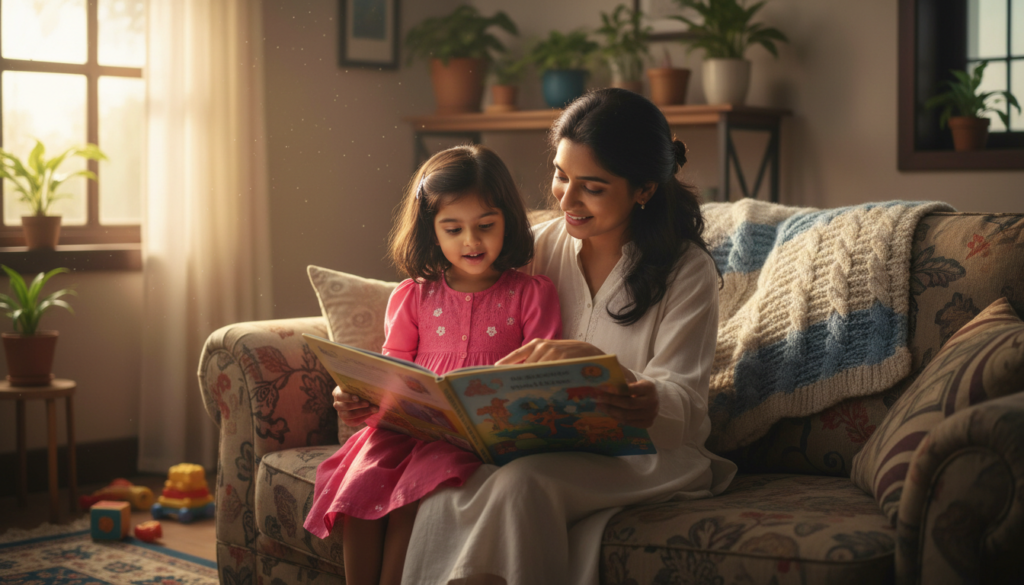
Good books are among the best learning tools a child can have. They build vocabulary, imagination, knowledge and empathy, and they cost very little, especially if you use a library.
But with thousands of children’s books available, how do you choose? This guide explains the main types of child education books, what to look for at each age, and how to read with your child so books make the biggest difference.
Why Books Matter for Children
- Language: books use richer words than everyday talk.
- Knowledge: information books teach about animals, space, history and more.
- Imagination and empathy: stories let children see the world through others’ eyes.
- Attention: listening to stories builds concentration.
- Bonding: reading together is warm, shared time.
Sadly, many children are reading less. The National Literacy Trust’s 2025 survey found that only about 1 in 3 children aged 8 to 18 enjoy reading in their free time, the lowest level in 20 years.
Types of Child Education Books
| Type | Good for |
|---|---|
| Board and cloth books | Babies: sturdy pages, bright pictures |
| Picture books | Toddlers and preschoolers: stories with large pictures |
| Rhyme and song books | Hearing sounds in words |
| Early readers | Children learning to read: simple words and sentences |
| Information (non-fiction) books | Curious children who love facts |
| Activity and workbooks | Practising letters, numbers and puzzles |
| Chapter books and novels | Confident readers |
| Comics and graphic novels | Reluctant readers; visual learners |
Choosing Books by Age
0 to 2 years
Sturdy books with faces, animals and everyday objects. Touch-and-feel and lift-the-flap books are favourites.
3 to 5 years
Picture books with repeated phrases, rhymes and simple stories. Alphabet and counting books.
6 to 8 years
Early readers matched to their phonics level, plus picture books and simple information books to read together.
9 to 12 years
Chapter books, series, comics and non-fiction on their interests.
What Makes a Good Children’s Book?
- suits the child’s age and interests
- clear, engaging pictures
- language that is rich but understandable
- diverse characters and settings
- a story or topic that invites questions
- in your home language as well as English, if possible
How to Read With Your Child
- Make it cosy: a regular time and comfortable place.
- Talk about the pictures before reading the words.
- Ask questions: “What do you think will happen next?”
- Use voices and expression.
- Re-read favourites: repetition helps learning.
- Let your child choose sometimes.
These moments are a powerful form of the “serve and return” interaction that Harvard’s Center on the Developing Child says builds children’s brains.
Building a Love of Reading
The National Literacy Trust shares ideas for encouraging reading for pleasure, such as giving children choice and making reading social. Other ideas:
- visit the library often
- keep books where children can reach them
- let children see you reading
- swap books with friends
For more, see how to foster a love of learning in young children, key strategies for improving literacy and our early childhood education tips for parents.
Frequently Asked Questions
Are workbooks good for young children?
A little practice is fine, but stories and play-based learning should come first.
Are e-books as good as printed books?
They can be useful, but many experts suggest printed books for young children, as they encourage more talk and fewer distractions.
Key Takeaways
- Books build language, knowledge, imagination and empathy.
- Choose books that match your child’s age and interests.
- Read together often and talk about the story.
- Give children choice to build a love of reading.