
The Central Board of Secondary Education (CBSE) is one of India’s main national school boards. It sets the curriculum and conducts the Class 10 and Class 12 board exams for thousands of affiliated schools, including Kendriya Vidyalayas, Jawahar Navodaya Vidyalayas and many private schools in India and abroad.
This guide explains what CBSE is, how its curriculum and exams work, the major changes under India’s National Education Policy 2020, and how it compares with other boards.
Rules change often. Always check the latest circulars on the official CBSE website.
What CBSE Does
- affiliates schools that meet its standards
- prescribes the curriculum, mainly based on NCERT textbooks
- conducts the Class 10 and Class 12 board examinations
- issues certificates and mark sheets
- trains teachers and promotes new teaching methods
How CBSE Fits Into the National Structure
India’s National Education Policy 2020 introduced a 5+3+3+4 school structure: foundational (ages 3 to 8), preparatory (8 to 11), middle (11 to 14) and secondary (14 to 18). It also calls for more flexible subject choices and assessment that focuses on understanding rather than memorisation.
For how this compares with other countries, see how many years of schooling.
CBSE Board Exams
Class 10
From 2026, CBSE holds Class 10 board exams twice a year. According to All India Radio News:
- the first exam in February is compulsory for all students
- the second exam in May is optional, for students who want to improve their scores
- students can improve in up to three subjects from science, mathematics, social science and languages
- results for the February exam are expected in April, and for the May exam in June
Class 12
Class 12 board exams are usually held from February to April. Results are important for university admission, along with entrance tests such as CUET, JEE and NEET.
Subjects and Streams
In Classes 9 and 10, students study languages, mathematics, science and social science, with some optional subjects. In Classes 11 and 12, students usually choose a stream:
| Stream | Common subjects |
|---|---|
| Science | Physics, chemistry, maths and/or biology |
| Commerce | Accountancy, business studies, economics |
| Humanities | History, political science, geography, sociology, psychology |
NEP 2020 encourages more flexibility across streams. For general advice on choosing subjects, read secondary school subjects: core, elective and how to choose.
CBSE vs Other Boards
| Board | Key features |
|---|---|
| CBSE | National board; NCERT-based; widely recognised for national entrance exams |
| CISCE (ICSE/ISC) | National board; detailed syllabus; strong focus on English |
| State boards | Run by each state; local language options; state-specific syllabus |
| International boards (IB, Cambridge) | Global curricula; often more expensive |
Why Parents Choose CBSE
- Nationwide recognition, useful for families who move often.
- Close alignment with national entrance exams.
- Many schools in India and abroad.
Tips for CBSE Students
- Master NCERT textbooks first.
- Practise sample papers and previous years’ questions.
- Use retrieval practice and spaced revision.
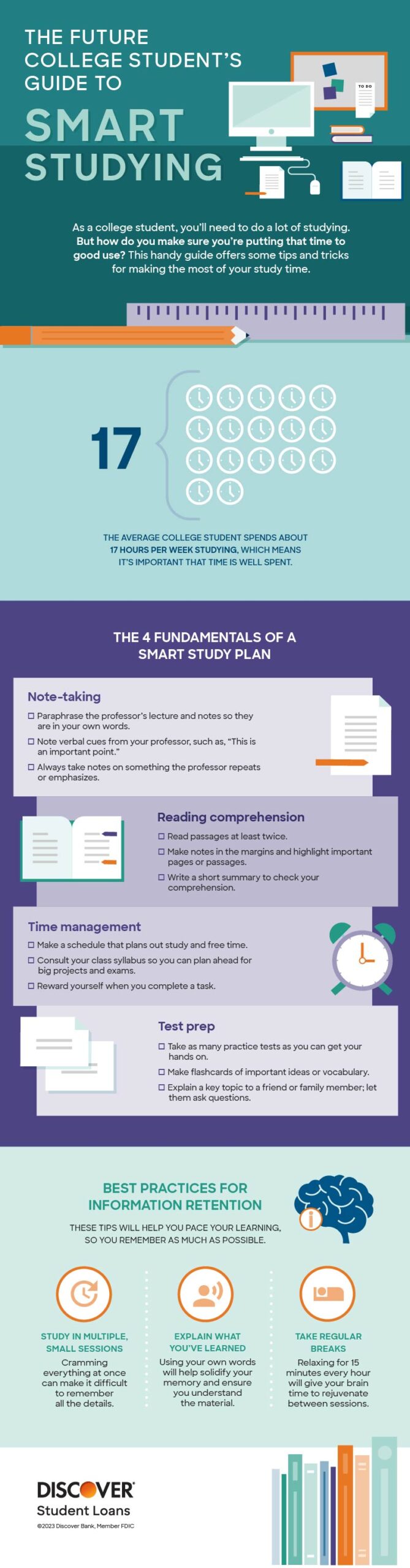
- Plan revision early and keep a balanced routine.
Completing secondary school opens many doors. Read the importance of secondary education.
Frequently Asked Questions
Is CBSE only for Indian students?
No. CBSE-affiliated schools also operate in many other countries, often serving Indian families abroad.
Is the second Class 10 exam compulsory?
No. Under the new system, the May exam is optional, for improving scores.
Key Takeaways
- CBSE is a national school board in India that conducts Class 10 and 12 exams.
- From 2026, Class 10 exams are held twice a year, with the second optional.
- NEP 2020 brings a 5+3+3+4 structure and more flexibility.
- Check official CBSE circulars for the latest rules.