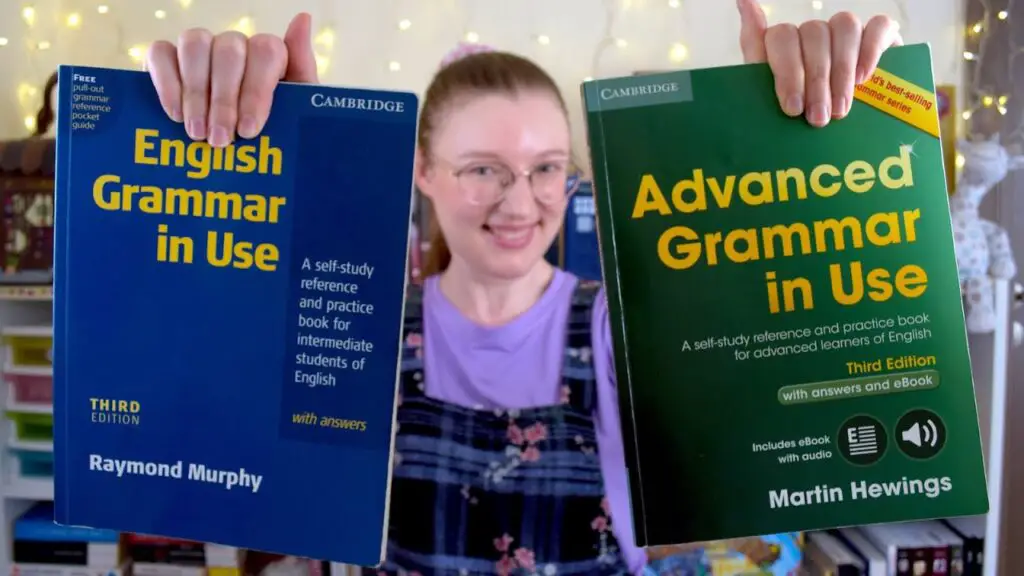
Advanced Grammar in Use is the advanced-level book in Cambridge University Press’s Grammar in Use series. Unlike the elementary and intermediate books, it is written by Martin Hewings, not Raymond Murphy, but it follows the same clear, practical style.
If you already feel comfortable with intermediate grammar and want to sound more natural and precise, this book is the next step. This guide explains who it is for, what it covers, how it is organised, and how to study with it.
Who Is It For?
- Learners at upper-intermediate to advanced level.
- Students preparing for exams such as Cambridge C1 Advanced, C2 Proficiency or higher IELTS bands.
- University students who need precise grammar for academic writing.
If you still make frequent mistakes with basic tenses or conditionals, start with English Grammar in Use first.
How the Book Is Organised
Like other Grammar in Use books, each unit is usually two pages: an explanation on the left and exercises on the right. Extra practice sections and a key (in the “with answers” edition) help self-study learners check their work.
What It Covers
The book goes deeper into topics you met at intermediate level and adds more advanced structures, such as:
- Fine differences between tenses and aspects.
- Advanced uses of modal verbs.
- Complex passives (He is said to be…).
- Participle and reduced clauses.
- Inversion (Rarely have I seen…) and cleft sentences (What I need is…).
- Advanced conditionals and linking words.
Strengths
- Explains subtle differences that intermediate books skip.
- Natural, modern examples.
- Familiar two-page format that works for self-study.
Limitations
- Assumes strong intermediate grammar.
- Some explanations are detailed and need careful reading.
- Not an exam course on its own; combine it with practice tests.

How to Study With It
- Use the study guide to find your weak areas first.
- Do one unit a day and redo the exercises a week later.
- Use each new structure in your own writing, such as essays or reports.
- Read advanced texts (quality newspapers, academic articles) and notice the structures you studied.
Which Book Comes Before It?
For an overview of every level and edition, see our guide to the Grammar in Use series. For exam-focused advanced practice, also look at Grammar and Vocabulary for Advanced.
Free Practice
Add advanced practice with the British Council’s LearnEnglish C1 grammar lessons, Purdue OWL’s grammar guide for academic writing and its grammar exercises.
Final Thoughts
Advanced Grammar in Use helps you move from correct English to precise, natural English. Make sure your intermediate grammar is solid, then work through it steadily, using each structure in your own writing.