English Grammar in Use by Raymond Murphy, published by Cambridge University Press, is one of the best-selling grammar books in the world. Teachers and students across Bangladesh, India and many other countries use it for self-study and in class.
This guide explains the different books in the series, which level is right for you, how the units are organised, and how to study with them effectively. It also covers strengths, limitations and good free resources to use alongside the book.
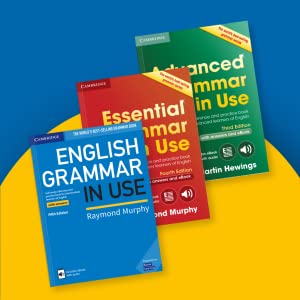
The Books in the Series
| Book | Colour | Level |
|---|---|---|
| Essential Grammar in Use | Red | Elementary (about A1–B1) |
| English Grammar in Use | Blue | Intermediate (about B1–B2) |
| Advanced Grammar in Use (by Martin Hewings) | Green | Advanced (about C1–C2) |
There are versions with and without answers, and some editions include an eBook or online practice. American English versions (Grammar in Use by Raymond Murphy and William R. Smalzer) are also available.

Which Book Should You Choose?
- Red (Essential): if you are a beginner or find basic tenses and articles difficult.
- Blue (English Grammar in Use): if you know the basics and want to fix mistakes and use grammar more accurately. This is the most popular book, and suits many SSC, HSC and university students.
- Green (Advanced): if you are preparing for IELTS band 7+, Cambridge C1/C2, or academic writing.
If you are unsure, try a few units from the blue book. If most exercises are easy, move up; if most are hard, start with the red book.
How the Book Is Organised
The famous format is simple: each unit has two pages.
- Left page: a short, clear explanation with examples and pictures.
- Right page: exercises to practise that grammar point.
Units are grouped by topic: present and past tenses, present perfect, future, modals, conditionals, passive, reported speech, questions, -ing and to-infinitive, articles and nouns, pronouns, relative clauses, adjectives and adverbs, conjunctions and prepositions. At the back, there are appendices, additional exercises, a study guide to find your weak areas and an index.
Strengths
- Very clear, short explanations in simple English.
- One topic per unit, so you can study in small steps.
- Lots of practice, with answers in the “with answers” edition.
- Works for both self-study and classes.
- Covers the grammar learners need most.
Limitations
- Mostly focuses on grammar accuracy, not speaking or writing skills.
- Exercises are mainly written gap-fills, so you also need real speaking and writing practice.
- British English focus in the main edition (the American edition is separate).
How to Study With It: A Simple Method
- Use the study guide at the back to find units you need.
- Do one unit a day: read the left page, then do the exercises without looking back.
- Check your answers and read the explanation again for any mistakes.
- Write five sentences about your own life using the grammar point.
- Review every Sunday: redo one or two exercises from the week.
- Use the additional exercises at the back to mix topics.
At one unit a day, you can work through the whole blue book in a few months.
A Note on Free PDFs
Many websites share pirated PDFs of this book. These are illegal and can contain malware. Buy the book, borrow it from a library, or use free legal resources instead. See our guide to free, legal English grammar PDFs.
Free Resources to Use Alongside the Book
- The British Council’s free LearnEnglish grammar lessons, organised by level.
- Purdue OWL’s grammar guide, useful for writing.
- Purdue OWL’s grammar exercises for extra practice.
Alternatives
- Basic English Grammar by Azar – chart-based, good for classrooms.
- Practical English Usage by Michael Swan – an advanced reference with no exercises.
Frequently Asked Questions
Is English Grammar in Use good for IELTS?
Yes. The blue book helps you fix common errors, which improves your Grammatical Range and Accuracy score. For band 7 and above, also use the advanced book.
Can I study it without a teacher?
Yes. It was designed for self-study. Choose the edition “with answers”.
Final Thoughts
English Grammar in Use is popular for good reason: it is clear, practical and well organised. Pick the right level, study one unit a day, and combine it with reading, writing and speaking practice for the best results.