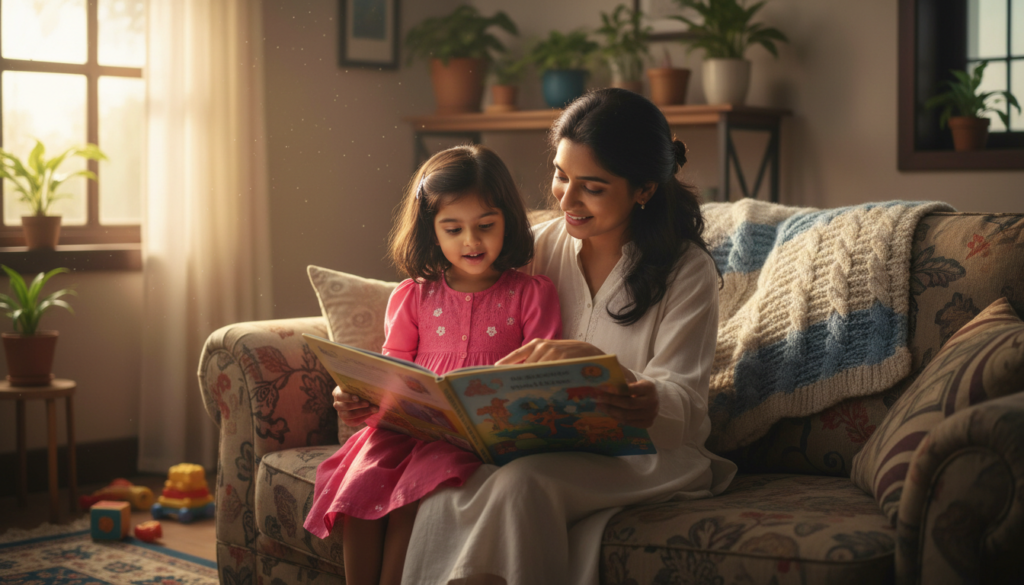
When people talk about “child success”, they often mean exam marks. But success is wider than that. It includes good health, strong friendships, a steady job, confidence and the ability to keep learning.
Parents’ education is linked to many of these outcomes, not just grades. Yet the things that drive success can be learned and practised in any home.
This article looks at five areas of child success, how parental education connects with each, and a simple family plan you can follow.
Five Areas of Child Success
- Learning: reading, maths, thinking skills and school results
- Health: growth, nutrition, sleep and safety
- Social and emotional skills: getting along with others, managing feelings
- Character: effort, honesty, responsibility and persistence
- Future opportunities: further study, work and a stable life
How Parental Education Connects to Each Area
1. Learning
Children of more-educated parents tend to score higher on tests on average. One reason is the amount of reading and talk at home. Our main guide on how parental education affects children’s success explains the research in detail.
2. Health
Mothers’ education is strongly linked to child survival and health. The Global Partnership for Education, citing UNESCO, explains that when mothers learn, children live. Educated parents are more likely to know about vaccines, clean water and good food.
3. Social and emotional skills
Warm, calm and consistent parenting helps children learn to manage feelings. Parenting knowledge, which can come from school or from parenting classes, supports this.
4. Character
Effort and persistence are learned by example. Children copy the adults around them. A parent who keeps trying at work or at home teaches more than any lecture. This has nothing to do with degrees.
5. Future opportunities
Parents who went further in school often know how to guide children through exams, admissions and careers. A Dutch study reported by U-Today found that children with higher-educated parents tend to perform better in their own studies.
The Hidden Drivers of Success
When you look closely, most of the advantage comes from a few everyday habits:
- Talking and reading together
- Routines for sleep, meals and homework
- High but kind expectations
- Praise for effort, not just results
- Contact with teachers
- Knowing where to find help and information
Every family can build these habits. Formal education can make them easier, but it is not required.
A Simple Family Success Plan
Here is a plan any family can start this week.
Daily
- Read or tell a story together for 10 to 20 minutes.
- Ask, “What did you learn today?” and listen.
- Keep a set time for homework and a set bedtime.
- Eat at least one meal together without screens.
Weekly
- Check school bags and notebooks.
- Do one fun learning activity, such as a game, a visit or cooking together.
- Praise one thing your child worked hard on.
Each term
- Meet the teacher or attend the parent meeting.
- Set one learning goal with your child.
- Check health basics: eyes, teeth, vaccines and growth.
Each year
- Prepare for the new school year early. Our guide on preparing your child for the new school year can help.
- Talk about future dreams and what study they need.
- Look for scholarships, free courses or camps.
Success Is a Global Goal
The United Nations’ Sustainable Development Goal 4 aims for inclusive, quality education for all. The Global Campaign for Education explains what SDG 4 means. One reason for this goal is that educating today’s children also helps the next generation, because today’s students will be tomorrow’s parents.
If You Had Little Schooling
- Your belief counts. Tell your child you expect them to do well.
- Learn alongside them. Ask them to teach you what they learned.
- Use helpers. Older siblings, neighbours, teachers and libraries can fill gaps.
- Join adult learning. Literacy and evening classes show children that learning never stops.
For a deeper step-by-step approach, read how to educate your child to succeed.
Frequently Asked Questions
Is parental education the biggest factor in child success?
It is one of the strongest background factors in research, along with family income. But daily habits, school quality and the child’s own effort matter too.
Do children of highly educated parents always succeed?
No. Pressure, stress or lack of time can cause problems in any family. Support and balance matter more than degrees.
What is the best age to start?
As early as possible, but it is never too late. Even teenagers benefit from interest and guidance.
Key Takeaways
- Child success includes learning, health, social skills, character and future opportunities.
- Parental education is linked to all five.
- The real drivers are daily habits any family can build.
- A simple daily, weekly and yearly plan can make a big difference.